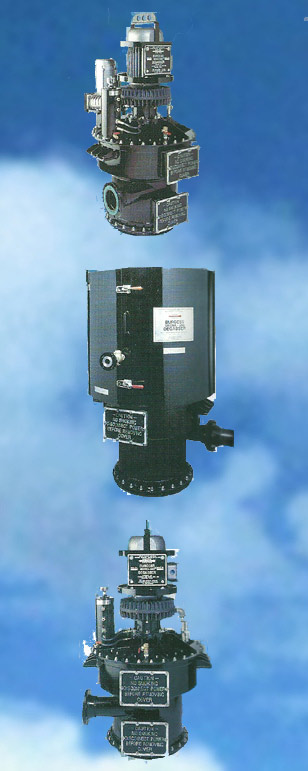
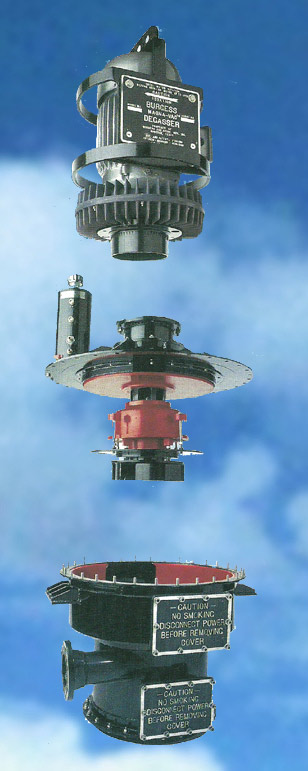
|
Burgess
Magna-Vac™ Degasser
"The Finest in the World"
The operation of the Magna-Vac™
Degasser is both effective and efficient.
The gas-cut mud is drawn into the degasser
by a vacuum created by a regenerative
vacuum/blower. The mud enters the vacuum
chamber of the degasser through a rotating
tubular body that has rectangular windows in
its wall. Mud accelerator vanes, located
within the rotor near the windows, radially
spray the mud outward at a high velocity
(i.e., 20ft./sec.) across the degasser's
vacuum chamber impinging it against the
inside wall of the circular vessel. The
agitation and turbulence created by this
constant impinging action allows the oxygen
and gas to separate from the mud. The Magna-Vac™
Degasser removes gasses and oxygen and helps
keep the drilling mud at a desired weight.
The unit can also be used as a mechanical
oxygen scavenger, thereby saving time and
money, and also extending the life of the
drill string due to reduced corrosion. |